Get Exercise You Genuinely Love
Develop a healthy relationship with exercise based on this essential idea: Everybody deserves exercise they love to do, and having it is purely a matter of skill.
Leverage your identity, values, and beliefs in a guided online course to develop behaviours that serve you for life.
New or returning to exercise? Fed up with the extrinsic motivation the mainstream fitness industry is built on? There is a better way. Clear out self-limiting beliefs and narratives blocking you, get extremely real about what your body likes, and build powerful skills that get exercise you genuinely love into your life.
How it works
The Groundwork
In The Groundwork we start by clearing out internal barriers that can hold us back.
We'll get to grips with limiting beliefs, self-narratives, feedback loops, and the role of identity all presented in a model that gives us clarity on what affects our behaviour. You'll also be able to use these skills to spot and address future behaviour issues as they crop up.
Getting internal barriers out of the way enables the journey we want to take.
The Physical Work
In The Physical Work you'll completely audit your physical capability's past, present, and future to get a crystal-clear picture of where you're at and where you're going.
You'll also identify your Platinum Movements – the physical movements your body loves the most!
With your needs mapped out, you'll design an exercise plan based on the movements your body loves the most, and the physical capability you rely on.
The Mental Work
In The Mental Work our lessons will bring the capability plan you've created and build it honestly and pragmatically into your real life–directly into your schedule.
There's being aspirational, and there's being pragmatic. Our job here is to bring them together.
This part is the nitty gritty of planning, scheduling, and executing what you've built, in order to experience the results you're after using the behaviours and movements you genuinely enjoy.
Get Ahead: FULL MEMBERSHIP
If you've got the "YES! – This Is It!" feeling right now and want to get the full course outright, you can buy full membership to the whole course including The Groundwork, The Mental Work, and The Physical Work here:
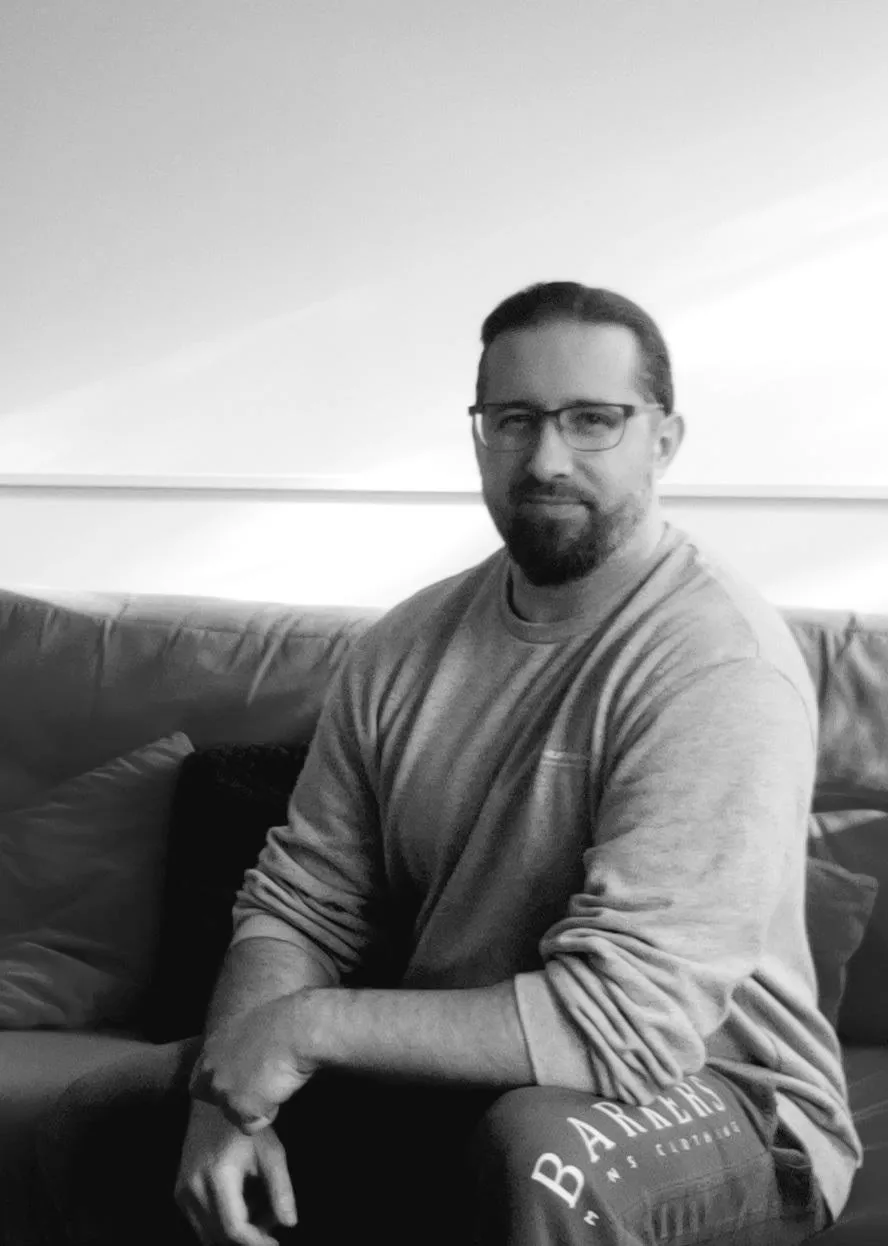
I'm Michael Pritchard.
I Show People Who Are Struggling To Exercise How to Get Regular Exercise They Genuinely Love.
Everybody deserves personalised exercise they love. 75% of adults figure it out for themselves. For the 25% who haven't: There's a formula for it.
My 15-year journey of trial and error has now been distilled into this transformative short programme: ‘Use It or Lose It: Your Most Capable Body,’ a unique learning course built from a lifelong passion for making fitness extremely self-honest, personalised, and long-term. Leveraging skills from my career in capability design, Use It or Lose It utilises learning techniques that put knowledge into action every step of the way.
I strongly believe Action to be a transformative learning tool, especially when applied to personal fitness. The course has Action Points throughout every lesson so you’ll practice and apply techniques and create tangible resources, not just absorb knowledge like reading a book. With Use It or Lose It you’ll create a relationship with fitness that is true to your preferences, values, and your life.
It's about developing the skills to achieve your goals, set your own direction, and embark on an exercise journey you genuinely love and are proud to have built.
The Big Questions
Entrenched perspectives set strong expectations. If behaviour change is our goal then let's take a fresh perspective on the familiar barriers to exercise.
1. What if I just don't have time to exercise?
Sounds like a job for maths! We each have that lovely 24 hours per day. If we subtract the time spent sleeping, and the time spent on our responsibilities, the remainder (I'd call it Free Time) is ours alone to spend however we choose – which could be doing exercise we love.
If sleep and responsibilities truly do add up to 24 hours a day, Free Time doesn't exist and exercise would truly not be possible. To a person in that position I would earnestly recommend taking on fewer responsibilities for the sake of their mental and physical health, and quality of life (all of which are themselves important responsibilities.)
Let's split the fact from the narrative:
Fact: We each have a measurable value of Free Time per day. We can spot it by writing down our sleep time and responsibilities time and subtracting those from 24 hours.
(e.g. 24 hours -8 sleeping, -8 working, -1 on commute, -1 on chores, -1 for dinner, -2 dedicated quality time with loved ones = Free Time at 3 hours.)
Narrative: The phrasing "I just do not have time," is a self-narrative, but is it based on the measurable facts? Reflecting on the facts is a terrific way to bring it into question – and rephrase it into one that serves you, rather than limits you.
If you recoil at this challenge to the question, Use It or Lose It is perhaps not for you. Well done establishing that up front.
But if you find that line of thinking useful, the course is full of similar exercises. It can be mentally and emotionally exhausting doing them! But it is work worth doing. And these techniques can be useful in other areas of life as well – anywhere you spot a behaviour or a limitation of your own, you have every right to question it and see if there is a change you can make. The tools in the course give you a way to do that.
2. I experience chronic low energy. How can I exercise?
I like this question. Just like time, energy is a huge limiting factor when it comes to exercise. And everyone's experience of it is different.
My answer is that sometimes we internalise ideas and narratives based on what we see lots of like, "training is for athletes and bodybuilders." But in this case the simple fact is "training" can be anything you want it to be. It can be playing outside with the kids. It can literally be a walk in the park. It can be a yoga workout in the living room from an online video, or self-directed while listening to an audiobook. There is no need to train to other people's standards when we can each set our own.
The good news is that training specifically to increase energy is very much a thing.
You can make real gains through minute changes – like one additional minute spent walking per day, or some gentle stretching and breathing exercises, gentle calisthenics. Perhaps you'll work up to some ambitious progressive-load weightlifting or high-impact interval intensity training, or a stationary bike spin class.
This course focuses on movement – physical capability – but let's acknowledge the role other things play regarding our energy levels too: sleep, food, hydration, breathing, hormones, medication, and our physical and our social environment (including our online environment). There are lots of additional levers to pull in coordination with your physical activity to help you get those energy levels up and maintain them.
Bottom line: if there are any movements you enjoy doing and would want to get better at, you can make good use of Use It or Lose It: Your Most Capable Body.
3. I've tried exercising before and failed. How is this different?
There are a lot of training programmes out there. There is a tremendous amount of value on offer, but not every resource does everything. So finding the right fit is key.
Use It or Lose It takes the approach of doing the internal work first to ensure our emotions, beliefs, narratives, and identity really are fit for purpose. With that foundation the course then focuses on physical capability, and personalised exercises that make for constructive, sustainable exercise behaviours. This approach is about making it valuable, enjoyable, and long-lasting by design.
The course one is tough on the mind, and tough on the emotions. It requires extreme self-honesty. I strongly believe that doing the internal work up-front and building the rest upon it is the most powerful way (maybe the only way) to make exercise a part of life that we genuinely love. Doing the difficult part up front so that it's easy after that.
In my experience many exercise programmes make the entry easy at the risk of making the long-term adherence unnecessarily difficult. We see that in huge volume every year for example, where gyms lower their prices for the New Years Resolution crowd to gain an easy entry – an honourable intention – and often backed up with terrific personal training services that teach people how to do exercises correctly and safely... only to see the inevitable mass fall-off later in the year as habits don't stick, members drift away, and many people are left with a bitter experience of failure and narratives like "it's too hard," or "exercise is not for me," or "I hate it."
It's common, it's heartbreaking, and it's unnecessary.
Setting behaviour up to succeed from the outset by being radically honest with yourself, that's how to make an approach that will stick. You've got to love it.
4. How do I know if this is the right programme for me?
You're right to need certainty. The Free Trial is there for you to take the first 4 lessons from Module 1: The Groundwork for free so that you'll know for certain this course is for you before you buy.
In terms of the time investment required – each of those 4 lessons is up to 30 minutes long each, meaning 2 free hours of learning to see if you want more or not.
And the best part?
The techniques and Action Points in those free lessons MIGHT be all you need to unblock yourself from taking the action you need to get solidly into exercise you love without needing the full course!
You can sign up at link on the top of this page.
5. What if I just don't enjoy exercise?
That could be a limiting self-narrative – and I'd caution anyone about entrenching that one. Better to leave yourself some wiggle room. A chance for a positive experience to break the pattern before it becomes a forever-rule.
It's a bit like saying "I don't enjoy food." It can be evidence-based, a logical conclusion from a consistent string of bad experiences. It can even be true in an absolute sense, if we make it true. But it is self-limiting and (in my view) a bit ridiculous.
It might even be factually true! But you can't know that until you've tried every exercise you're capable of doing IN every viable context, which is not viable. You might, for example, have tried deadlifting before. But were you in a fast-paced class, were you in a crowded gym trying it alone and uninstructed for the first time, or were you in your mate's garage gym exercising while you hang out, having fun? Were you well rested and fully hydrated, or badly hung over, or stressed out? Those are very different contexts all for one exercise. The point: You might've hated an experience but that doesn't necessarily mean you don't love the exercise.
Making a self-narratives out of experiences is natural, but making them too rigid closes the door to better outcomes all for the sake of "avoiding further disappointment".
Use It or Lose It encourages you to unlock those kinds of doors. The aim is to leverage movements you love, and to try new things to discover movements you genuinely enjoy: we call those your Platinum Movements.
The goal is to turn fitness into a fun and rewarding part of life. That starts by being open to the idea. If you've already reached the conclusion you don't enjoy exercise, not even this course will change that for you. But if you want to change it yourself, Use It or Lose It will show you how to unlock that limiting self-narrative, replace it with one that serves you getting what you want, and what actions to take to make it happen.
With that said, even without discovering any Platinum Movements, Use It or Lose It will show you how to audit your physical capability, design your future capability, and build a body conditioning plan that locks it in. As we age we lose physical capability: we can regain some but we can preserve it before it's lost. Locking in movements you rely on as exercise you're not in love with is just as valuable as incorporating the Platinum Movements you genuinely enjoy.
If that approach sounds worth a go, and if you're genuinely open to the possibility of success, I invite you to take the Free Trial and find out for sure.
It could be just what you're looking for.
6. What if I'm too out of shape to start?
Physical capability is not about shape. We have got to get out of the limiting perspective that fitness and exercise are about how you LOOK. When we think instead about fitness in terms of physical capability we get away from relying on extrinsic motivators like vanity social status, and we get instead into the intrinsic motivation of what am I capable of, and what capability do I want, which are way more empowering. Exercise really is about what you can do and how well you can do it. Developing your swimming, or your bench press, or your running is capability-first exercise. Of course your body will adapt. But you have to love the activity itself. If you only love the adaptation to the activity that is not enough and you won't keep at it.
That's the secret of Use It or Lose It: Your Most Capable Body.
Consider this: Everybody has some physical capability. What this course does is give you an opportunity to identify the most essential physical capabilities that you rely on in your life and lock them in for the long haul.
Capability loss can and does happen without our realising it. For example... When was the last time you raised both your hands over your head? Maybe it was today, or a few months ago, or even more. When will be the next time you expect to do that? Maybe tomorrow, maybe you have absolutely no idea because you'd never even thought about it before. Why should you?
The answer is because it may be a physical capability you rely on without realising it. Reaching up to test and maintain our home's smoke alarms needs arms above the head. That could be quite a serious capability to lose over time without realising it, since we rely on it for something important.
There are lots of things like that. Getting up off the floor – when was the last time you did that? Climbing a ladder? Taking the stairs as you would if the elevator's out? A walk up a hill? These capabilities, we either use them or we risk losing them.
What if you had a guide that guided you through writing down all the movements you rely on, and then put those into exercises? Raising your arms up overhead and lowering them down to your sides is a great mobility exercise that conditions this physical capability for decades to come. If you do it every week you'll be very unlikely to lose it – and if you did, it would never happen without you spotting it and mitigating it.
It's a powerful, practical, and protective principle.
Don't double-down on a current disadvantage like not being as fit as you like when you can seize a new advantage right away, in the form of actionable knowledge.
I encourage you to grab the Free Trial at the top of this page and confront that "I'm out of shape" self-narrative head on. You might surprise yourself at what's possible on the other side of that.
READY TO GIVE US A TRY?
Get Started Today – FREE!
For those who are still searching for the answer, I invite you to try the first part of Use It or Lose It: Your Most Capable Body completely free to experience this for yourself.
Identify and Eliminate Self-Limiting Beliefs About Exercise In Under 3 Days.
...PLUS How to Rewrite Them to Support Your Goals.
Invest 30 minutes and you'll know if this is the game changer you've been looking for.
All you need is an email, self-honesty, and the courage to face your beliefs.
Thanks for learning!
Michael Pritchard
Ready To Make The FULL Commitment To Get Exercise You Genuinely Love?
For those who feel a strong need to transform your relationship with exercise now
and require step-by-step guidance and practical tools to make that happen
(with unlimited direct access to the author for support, encouragement, and to celebrate your success)
Get your full course membership for a single one-time payment.
Transform your relationship with exercise. Get exercise you LOVE designed into your life. In just 3 weeks.